


- Event
-
 Traditional art Bonfire (takigi) Noh Performances Sado Okesa (folk song and dance) Bunya Puppet Theatre
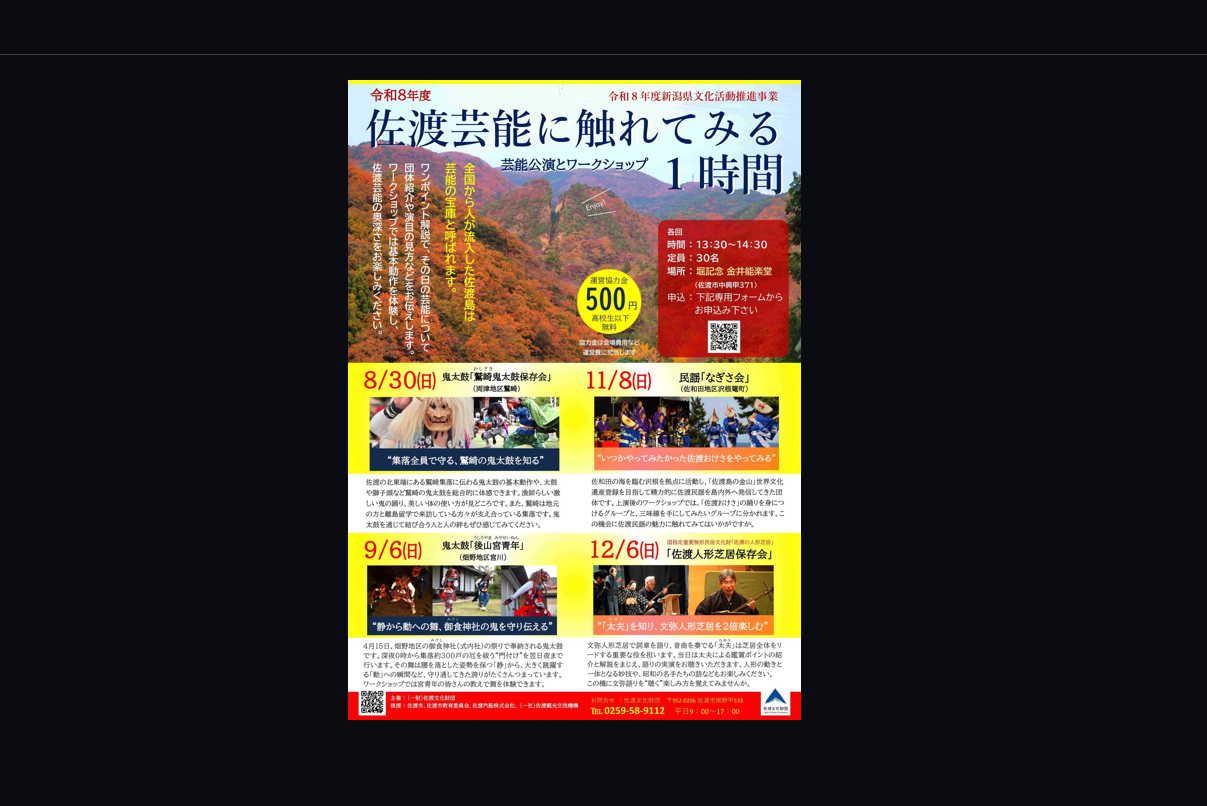
1 hour to experience Sado performing arts (12.6 *Dates 6/21, 7/12, 8/9, 8/11)
For those of you who love Sado, the Sado Cultural Foundation presents this workshop. Hear directly from the performers, learn their movements, and experience Sado performing arts rooted in daily life.
Kuninaka area -
 Traditional art Ondeko (Demon Drumming) Lion Dance
Aikawa Festival (10.19)
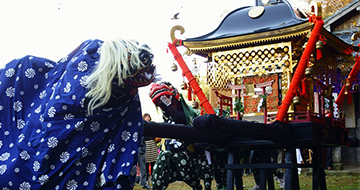
Aikawa Festival is the annual festival of Uto Shrine, the tutelary shrine of the Aikawa area. With over 400 years of tradition, it is one of the largest village festivals in Sado. After rituals at the shrine, a portable shrine is paraded through the town, while a taiko team, a Mamemaki dancer dancing to the beat and a lion go from house to house. The climax is in the cumulation of lights around 9 pm, when the portable shrine returns accompanied by lanterns hanging from long poles, to the main shrine, itself surrounded by strung up red and white paper lanterns. It is a scene that makes you feel the weight of history.
Aikawa area -
 Other
OtherCommemorating Don’ō, “the greatest tea master since Sen no Rikyū,” at the Site of the Former Sado Magistrate’s Office: The 2026 Sado Don’ō Tea Ceremony (10.17~10.18)
Once a year, the Sado Don’ō Tea Ceremony is held in memory of Don’ō (Takashi Masuda), who is hailed as “the greatest tea master since Sen no Rikyū.” To honor his achievements, the tea ceremony will be held again this year at the Sado Magistrate’s Office, where Takashi Masuda’s father once served. This year, during the two-day event, you can enjoy two tea ceremonies—one by the Omotesenke school and one by the Urasenke school—as well as a light refreshments session on both days. Let’s take a moment to savor a cup of tea during this peaceful autumn season while reflecting on the character and achievements of Masuda Takashi, one of Sado’s great figures.
Aikawa area -
 Other
OtherKitazawa Flotation Plant Illumination (2026.4.17~2027.1.5)
An annual event! As one of our efforts to create attractive places to visit at night around the island, this year we will again light up the historic Kitazawa Flotation Plant.
Aikawa area -
 Traditional art Big Lion
Kotoura Matsuri (11.3)
Kotoura Matsuri is the annual festival of Hakusan Shrine, situated in the Ogi Kotoura area which is famous for its good diving spots. Two big, red lions parade through the streets from door to door on the 2nd, to drive away evil spirits.
Minami Sado area -
 Traditional art Ondeko (Demon Drumming) Big Lion
matoba festival (9.20)
A festival at Hakusan Shrine with banners fluttering along the seashore. Three groups of demons each perform a different Maehama-style dance. Children with red painted cheeks also participate, taking turns dancing with the adult ogres. In the morning, after the dedication of the shrine, they walk from house to house, beating drums to gate the houses. A large lion parades through the district as well.
Minami Sado area -
 Festival Meal
Momijiyama Festival (11.7)
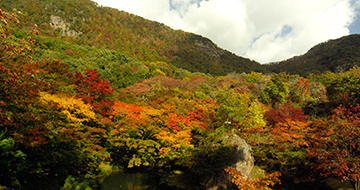
Momijiyama Festival is annually held on the last Sunday of October at Momijiyama Park, one of the top spots to view autumn leaves, and attracts many visitors from both inside and outside the island. The persimmon peeling contest, matsutake mushroom hunting and other attractions are gaining popularity. Visitors can enjoy soba buckwheat noodles, too. This event is chock full of pleasures to savor autumn on Sado Island.
Kuninaka area -
 Traditional art Meal Ondeko (Demon Drumming)
Onidaiko in Niibo (10.4)
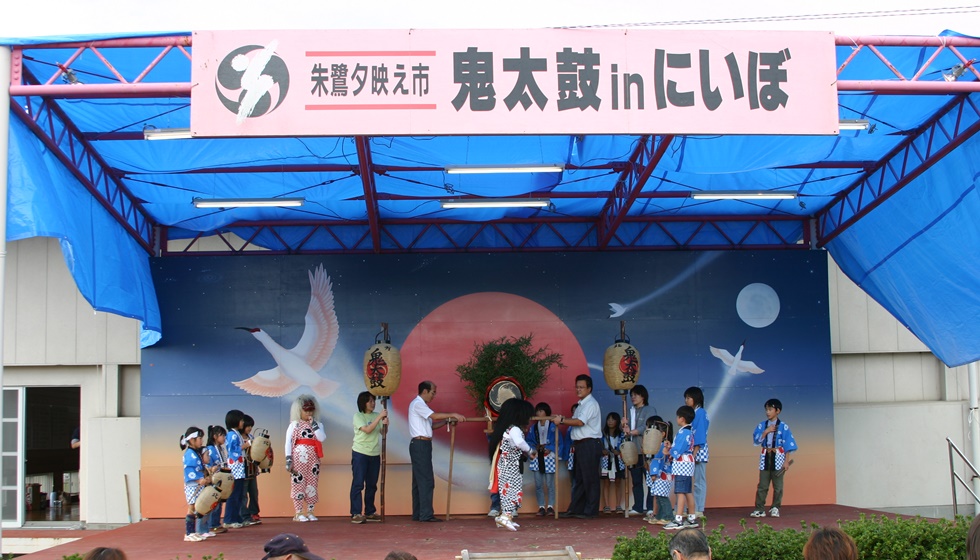
This event started in 1991 with the aim of revitalizing the local community, and attracts many visitors every year, partly because it brings together all of Niibo's onidaiko groups. The market, the other main attraction of the event, is filled with many stalls from the Niibo area and other places around the island.
Kuninaka area -
 Traditional art Bunya Puppet Theatre
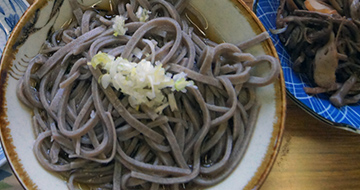
Osaki Soba No Kai (11.28~11.29)
This event has become a well-known food event on Sado Island. Visitors can enjoy traditional performing arts while eating Osaki soba (buckwheat noodles), a specialty of the island, boiled and seasoned fish, and other local delicacies. Many tourists and repeaters come from outside the island, so be sure to make reservations early.
Minami Sado area -
Traditional art Bunya Puppet Theatre
Osaki Soba no Kai (12.5~12.6)
Osaki Soba no Kai is a gourmet event which has achieved widespread popularity. While sampling the specialty soba (buckwheat noodles) and local dishes such as nishime (a stewed dish), you can enjoy a variety of traditional local performing arts. This is an event that satisfies both your stomach and heart! Book early, as spaces fill up quickly with both tourists from outside the island and repeat visitors.
Minami Sado area -
 Traditional art Meal Bunya Puppet Theatre
Osaki Soba No Kai (February) (2.7)
This event has become a well-known food event on Sado Island. Visitors can enjoy traditional performing arts while eating Osaki soba (buckwheat noodles), a specialty of the island, boiled and seasoned fish, and other local delicacies. Many tourists and repeaters come from outside the island, so be sure to make reservations early.
Minami Sado area -
 Festival
Otaue Rice Planting Festival (2.6)
Otaue Rice Planting Festival takes place at Gosho Shrine, which is well-known for its huge cedar tree. Performances mimicking rice planting activities are dedicated to the shrine deity to bring a bountiful harvest to the community. The rituals of the festival are divided into seven parts: seedling picking, field plowing, lunch break during planting activities, field-flattening, planting, and dinner after planting. During the rituals of seedling picking and planting, konaeuchi musicians (played by boys) perform music accompanied by the rhythm of drums. After the rituals, offerings to the deity are shared by the attendants. This event is designated as a Niigata Prefecture Intangible Folk Cultural Asset.
Minami Sado area -
 Other
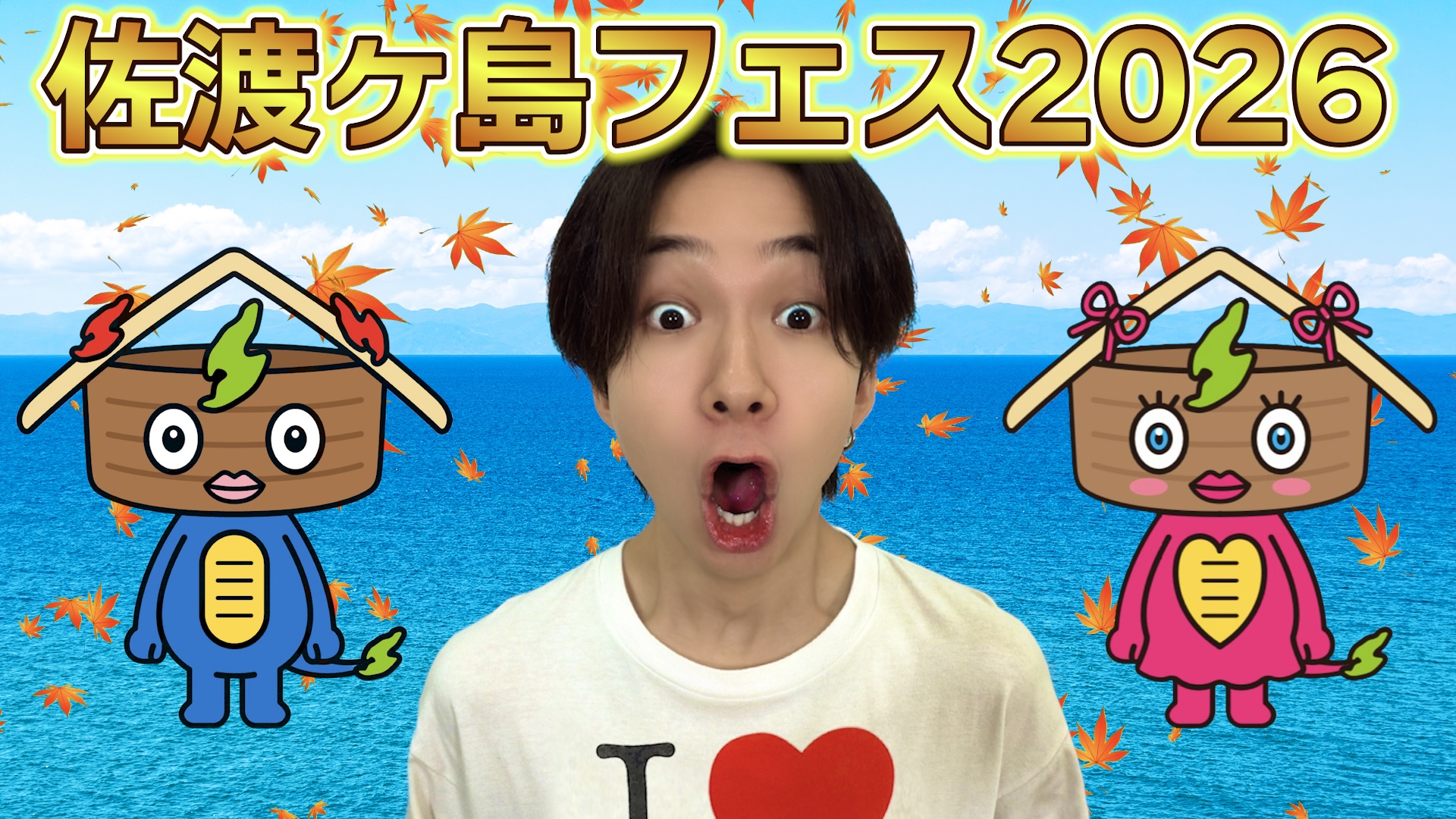
OtherSadogashima Fest 2024 (10.3)
Let's create a new festival on Sado Island day with Kee [Island Grownups]!
Ryotsu area -
 Traditional art Big Lion
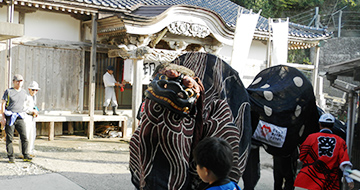
Sawasaki Festival (9.27)
Sawasakibana Lighthouse stands on the western edge of Sado Island. The "tarai boats" lined up on the shore give the village an atmosphere typical of Ogi Beach. A large lion makes an appearance at the festival. He walks to 27 houses in the village from late afternoon to early evening. Demons called "gotsu" also appear here and there in the village, chasing children.
Minami Sado area -
 Meal
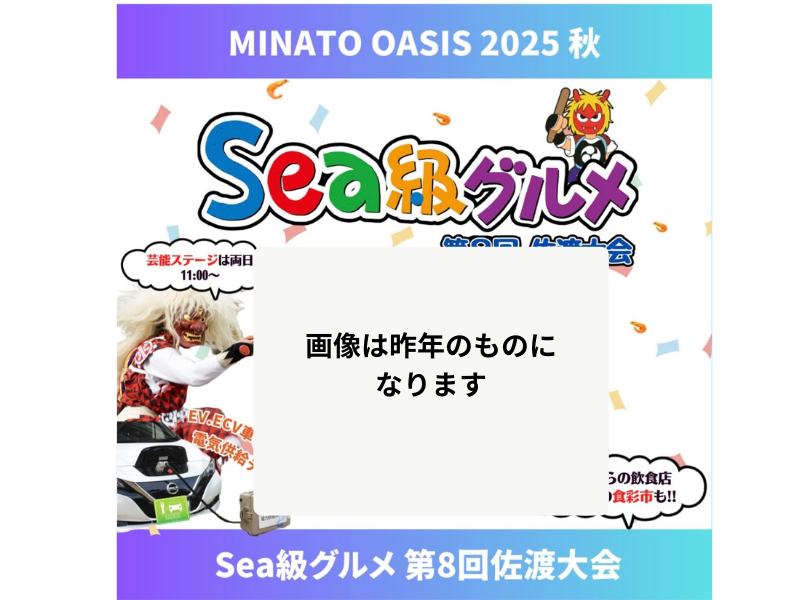
MealSea Gourmet Competition (8th Annual) (10.10~10.11)
In this Sea Gourmet Contest, chefs compete by creating a signature "Sea Gourmet" dish. These dishes feature locally sourced seafood from Sado Island's ports and other regional specialties, celebrating the bounty of the sea. Cast your vote on October 11th (Saturday) to help decide the winner! The award ceremony will be held the next day at 2:30 p.m. The restaurant that wins the Grand Prix will advance to the Sea Class Gourmet National Competition—so your vote is crucial to crown the number one restaurant in the nation!
Ryotsu area -
 Traditional art Bonfire (takigi) Noh Performances
Shoboji Temple Candlelight Noh Performance (10.18)
At Shoboji Temple, a Noh play is performed in memory of Kanze Motokiyo (Zeami), who was exiled to Sado. You can see a Noh performance in the mysterious light of candles, in the main hall of the temple where Zeami is said to have stayed. Before the performance starts, join the tea ceremony named "Haisho no Tsuki (moon viewed from the place of exile)" presented in the Omotesenke style. Enjoy a cup of maccha green tea prepared with the deep-sea water pumped up in Oda, Hatano, where Zeami landed on Sado Island. On this occasion, a special seminar is also held, and the ritual mask "Beshimi" (a mask with its mouth clamped firmly shut), a Niigata Prefecture's Designated Cultural Asset, is displayed to the public.
Kuninaka area -
 Traditional art Ondeko (Demon Drumming) Big Lion Tsuburosashi
Shukunegi Matsuri (10.10~10.11)
This is the annual festival of Hakusan Shrine in Shukunegi Village. Chitochinton (a Daikagura Bugaku dance performance using props and designated a Niigata Prefecture Folk Culture Asset), Ojishimai (the big lion dance), and Ondeko (demon drumming) groups parade through the village from door to door, to pray for the well-being of families and success in commerce. In the past, when a freight ship had to pass through a hazardous route, a young sailor dedicated a dance (to pray for safety) to Funadama Myojin (goddess of ships). Chitochinton, reputedly, originated from this dance. This joyful, comical and sexual folk art performance is in existence only in the southern part of Sado. There is a similar one in the Hamochi area, called "Tsuburosashi."
Minami Sado area -
 Traditional art Bonfire (takigi) Noh Performances
Tenryo Sado Ryotsu Takigi (bonfire) Noh Performance (10.12)
Ryotsu Takigi Noh has been playing a role in maintaining the tradition and quality of Sado's Noh performances, obtaining instruction and cooperation from Mr Honma (head of Sado Hosho School). You can see Noh performances in the magical atmosphere of the Noh stage in Shiizaki Suwa Shrine which faces Lake Kamo. Enjoy the traditional art of Noh, developed by the community.
Ryotsu area -
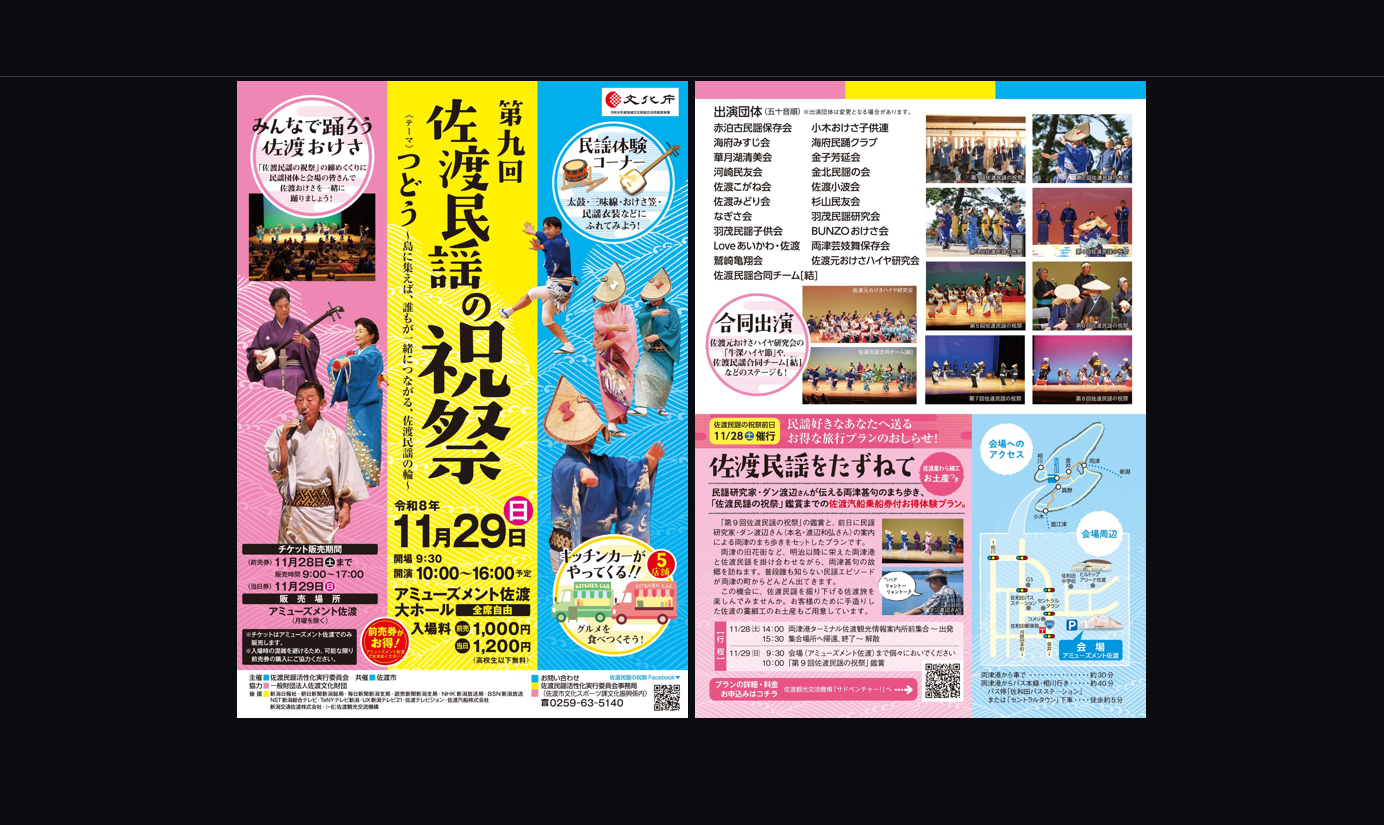 Traditional art Sado Okesa (folk song and dance)
The 7th Sado Folk Song Festival (11/17) (11.29)
This event brings together folk song groups from all over Sado Island. This year's theme is "Iwau - Folk songs about the World Heritage-listed gold mine on Sado Island" A raffle will be held before the finale. You may win wonderful products!
Kuninaka area